Planning the Shikoku 88-Temple Pilgrimage: Walking, Driving, Time, and Money
What You're Signing Up For
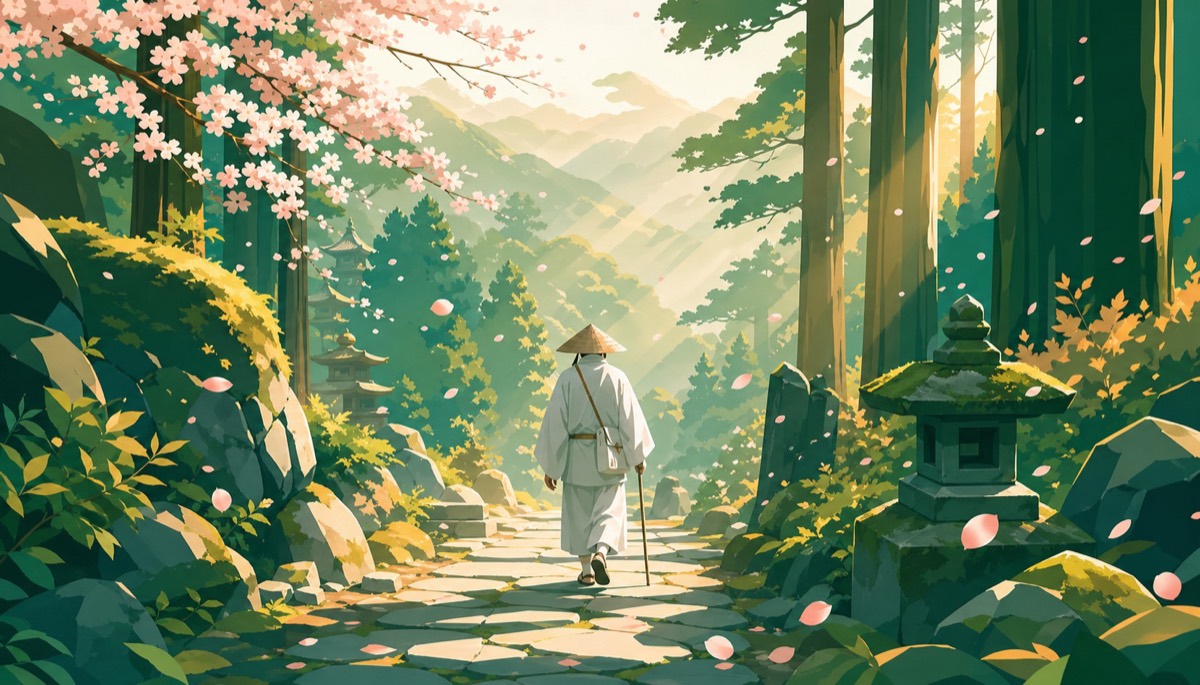
The Shikoku Henro circles Japan's fourth island through 88 temples associated with Kōbō Daishi (Kūkai), the founder of Shingon Buddhism. The full circuit runs roughly 1,100–1,200km depending on route choices — through cities, farmland, coastline, and serious mountains. Unlike the Camino or Kumano Kodo, it is a loop, traditionally begun at Temple 1 (Ryōzen-ji, near Tokushima) and walked clockwise, and it remains a living Buddhist practice more than a hiking trail: pilgrims wear the white vest (hakui), carry the staff (kongō-zue) that embodies the Daishi walking beside you — dōgyō ninin, "two traveling together" — and chant or offer at each temple.
Nobody checks your beliefs. Foreign walkers of every faith and none are welcomed; sincerity and basic etiquette are the entry fee.
Choose Your Mode Honestly
| Mode | Time for all 88 | Typical cost | Character |
|---|---|---|---|
| Walking (aruki-henro) | 40–50 days | ¥400,000–700,000 | The full transformative version — and a genuine physical undertaking |
| Sectioned walking (kugiri-uchi) | 4–6 trips of 7–10 days | spread over trips | How most modern Japanese pilgrims actually do it; entirely legitimate |
| Car / rental | 8–11 days | ¥150,000–300,000 | Every temple, little walking; mountain roads demand attention |
| Organized bus tour | 10–13 days (or staged) | ¥250,000–500,000 | Guided, all-handled; Japanese-language dominant |
| Bicycle | 18–25 days | ¥200,000–350,000 | Rewarding but hilly; some temple approaches must be walked |
Tradition explicitly permits any order and any transport — the pilgrimage counts. If you have only one week and want to walk, the consensus starter section is Tokushima's temples 1–23 (about 7–10 days), which includes the first mountain test at Shōsan-ji (Temple 12).
Walking Budget, Itemized
- Lodging: the nightly anchor. Shukubō (temple lodging, ~¥7,000–10,000 with two meals and morning service), minshuku/business hotels (¥5,000–9,000), plus free or donation options: zenkonyado (pilgrim rest houses), tsuyadō (simple temple shelters), and camping where permitted. A mixed-style walker averages ¥7,000–9,000/day all-in with food.
- Food: ¥1,500–3,000/day — convenience stores, udon (this is Kagawa's holy food), and included minshuku meals.
- Temple costs: no entry fees; the stamp (nōkyō) in your book costs a set fee at each temple office (a few hundred yen — the fee schedule was revised recently, so check current amounts), so budget roughly ¥30,000–45,000 for all 88, plus candles, incense, and osamefuda name slips.
- Gear: the pilgrim kit (vest, staff, sedge hat, stamp book) costs about ¥10,000–15,000 at Temple 1's shop. Otherwise it's standard long-distance kit; broken-in trail shoes matter more than anything ritual.
The Realities Nobody Puts in Brochures
- Road walking dominates. Perhaps 70%+ of the route follows asphalt — shoulders, sidewalks, tunnels with narrow walkways. Cushioned shoes beat stiff boots for most walkers, and a reflective sash is real safety equipment.
- The gaps are uneven. Temples 1–17 come thick and fast; Kōchi's coast (the "dojo of ascetic training") has 80–90km stretches between temples where the walk is the practice.
- Henro korogashi — "pilgrim-tumbling" mountain sections (Temple 12, 20, 21, 27, 60, 66 among them) — are steep, honest climbs. Respect them with early starts and water.
- Osettai: locals will hand you mikan, coffee, coins, sometimes a meal — gifts to the pilgrim tradition. Custom says receive graciously (refusing is impolite), give your osamefuda slip in return.
- Booking rhythm: call minshuku a day or two ahead (many are phone-only and Japanese-only; a translation app and set phrases genuinely suffice). April–May and October–November are peak; Golden Week needs earlier booking.
- Cash country: like all rural Japan — carry generous yen; post-office ATMs accept foreign cards, and JA/local ATMs may not.
When to Go
Spring (March–May) and autumn (October–November) are the classic seasons. Summer is punishing — heat, humidity, typhoons; winter is walkable in the lowlands but icy on mountain sections, with some lodgings closed. The full-loop walker starting in early spring finishes with Kagawa's easier final stretch in pleasant weather — one reason clockwise from Temple 1 endures.
Minimal Etiquette That Covers 95% of Situations
- Bow at the temple gate (sanmon) entering and leaving.
- Rinse hands and mouth at the water basin.
- At the main hall and the Daishi hall: offer your slip and coin, light candle/incense if you wish, and offer a chant (the Heart Sutra) or a quiet moment — sincerity over performance.
- Get the stamp after paying respects, not instead of them (offices typically open 8:00–17:00).
- Keep the staff out of restrooms, and wash its tip at day's end — it is the Daishi's embodiment.
Frequently Asked Questions
Do I need to be Buddhist?
No. Temples and locals extend the tradition to anyone walking with respect. Many foreign henro describe the ritual rhythm as the point regardless of belief.
Is it safe solo, including for women?
Shikoku is rural Japan — among the safest walking environments anywhere. Ordinary traffic caution on road sections is the main genuine risk.
Camino or Shikoku — which first?
They answer differently: the Camino is social, infrastructure-dense, and communal; the henro is solitary, ritual, and logistical. Walkers who love planning and quiet tend to prefer Shikoku; walkers who want the moving village of humanity choose the Camino. Do both and register nothing — there's no dual certificate here, only at Kumano.