Renovating an Akiya: Realistic Budgets, Contractor Realities, and the Problems Inspections Miss
The Honest Arithmetic
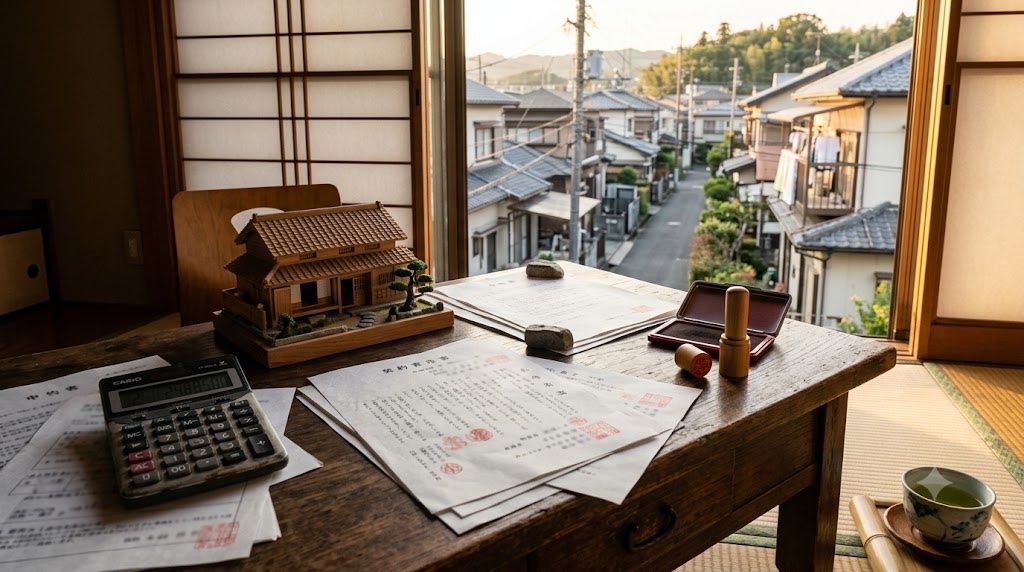
The famous "$20,000 Japanese house" is real, but it is a site price, not a home price. For an akiya that has sat empty for years, renovation routinely costs 2–5× the purchase price. The useful question isn't "how cheap is the house" but "what does the total project cost, and what would a finished equivalent cost to buy instead?" In many rural markets, a fully renovated house nearby sells for less than a DIY total — in others, especially near tourism or transit, renovation genuinely creates value.
Budget Tiers That Match Reality
| Scope | Typical budget (standard ~100m² house) | What it covers |
|---|---|---|
| Make it livable | ¥2–5 million | Deep clean and disposal, tatami/flooring repair, one modern water heater, minimal kitchen/bath refresh, safety-critical electrical fixes |
| Comfortable modernization | ¥6–12 million | New kitchen and unit bath, rewiring, replumbing, insulation in key rooms, double glazing on main windows, interior refinish |
| Full renovation | ¥12–25 million+ | Structural repairs, roof replacement, seismic retrofit, whole-house insulation, complete systems replacement, layout changes |
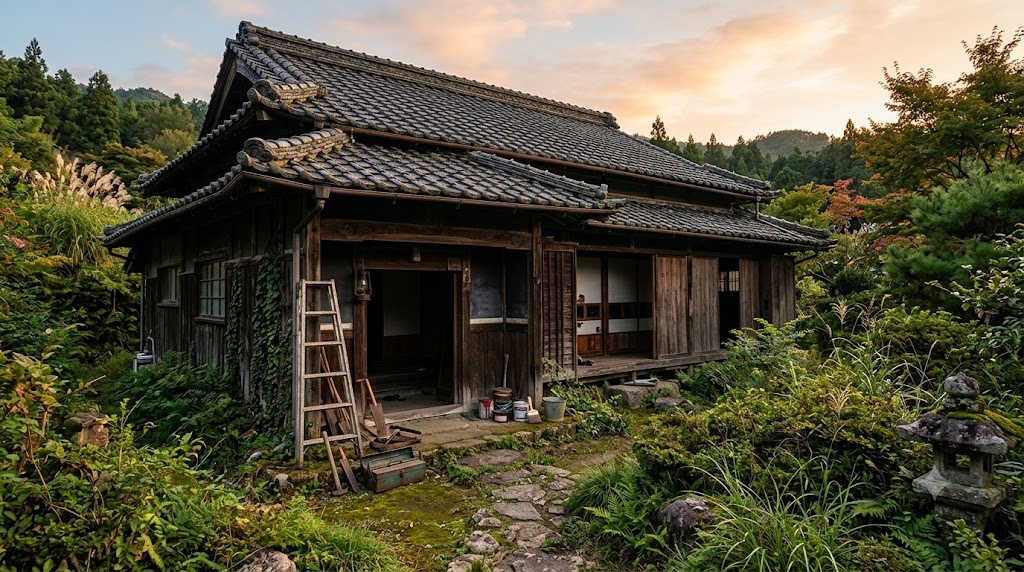
| Kominka (traditional farmhouse) restoration | ¥20–50 million+ | Specialist carpentry on post-and-beam frames, roof (especially thatch conversion or heavy tile), foundations — a craft project, priced like one |
Individual line items that anchor these totals: unit bath replacement ¥1–2.5M; system kitchen ¥0.8–2M; roof replacement ¥1–3M+; full rewiring ¥0.5–1.5M; septic-to-sewer or new johkasou (private treatment tank) ¥1–1.5M; termite treatment and repairs ¥0.3–1M+.
The Five Problems That Decide Whether It's a Bargain
- Structural integrity and the 1981 line. Japan's seismic code changed fundamentally in June 1981 (and again for wooden houses in 2000). Pre-1981 houses were built to the old standard; a seismic assessment (耐震診断) costs roughly ¥100,000–300,000 and retrofit commonly runs ¥1–3 million. Many municipalities subsidize both.
- Roof condition. Water is the killer of empty houses. A roof that "just needs a few tiles" from the ground can hide rotten sheathing and beams. Budget skeptically until someone has physically been up there.
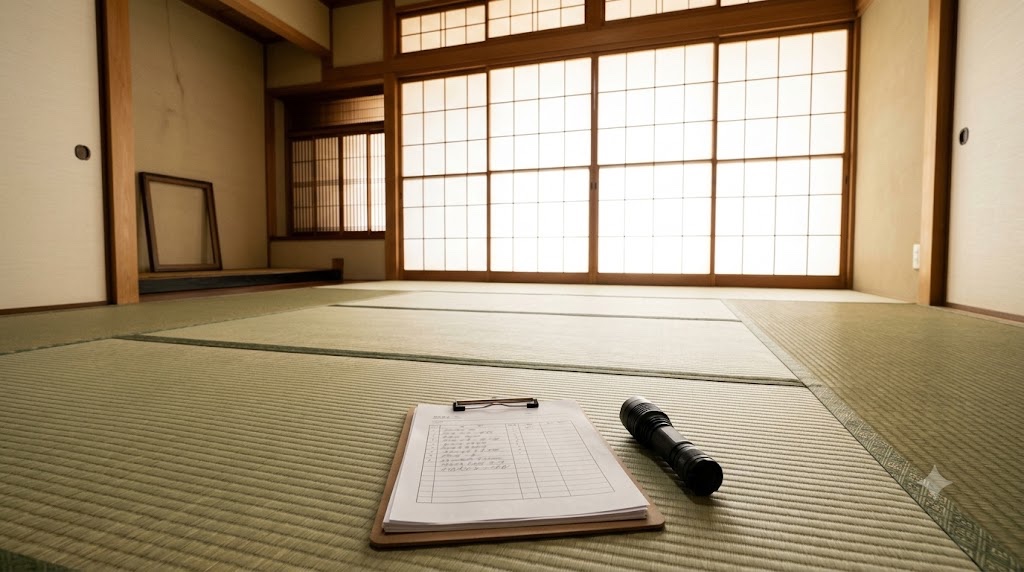
- Termites (シロアリ) and rot. Check sill plates (土台), bathroom perimeters, and anywhere ground contact exists. Sounding hollow, mud tubes, or spongy flooring near wet areas = assume worse than visible.
- Water, sewage, and legal access. Is the house on mains sewer, johkasou, or a literal pit? Is the water private well or municipal? And critically for resale: does the lot legally touch a road at least 2m wide (接道義務)? Houses failing road-access rules can be unrebuildable (再建築不可) — renovatable, but never replaceable, which caps their value permanently.
- Registration and boundary issues. Unregistered extensions, inheritance never recorded across a generation, and unsurveyed boundaries are common in rural stock. Your judicial scrivener can check the registry before you commit.
Contractors: The Real Bottleneck
In depopulating regions, the constraint is not money but available skilled labor. Local builders (工務店) are small, busy, and often booked out months; some quietly decline foreign clients over language concerns rather than say so. What works:
- Go through the municipality first. Akiya-bank towns often maintain lists of local contractors used to renovation-subsidy paperwork — being introduced beats cold-calling.
- Get 2–3 itemized quotes (見積もり). Vague single-line quotes are normal here; politely insist on line items. Expect quotes to take weeks.
- Phase the work. Do the envelope first (roof, structure, water) and live with ugly interiors — the reverse order is how people run out of money with a pretty, leaking house.
- DIY realistically. Demolition, cleaning, painting, and flooring are genuinely DIY-able. Electrical work legally requires a licensed electrician; gas and structural work should never be amateur projects.
Subsidies: Free Money, Deliberately Local
There is no single national akiya grant; support is municipal, and it varies wildly. Common patterns: renovation subsidies of one-third to one-half of costs capped at ¥300,000–2,000,000, demolition subsidies, seismic assessment/retrofit grants, and relocation incentives for families. Two rules: apply before starting work (retroactive applications are almost always rejected), and check residency conditions — many programs require you to register residence in the town, some for 5+ years.
Financing Reality
Japanese banks generally won't mortgage a cheap old rural house (the collateral value is near zero). Realistic paths: cash purchase plus a renovation loan (リフォームローン — unsecured, typically up to ¥5–10M, shorter terms and higher rates than mortgages, usually requiring Japanese income), JHF's Flat 35 renovation-linked products for qualifying projects, or municipal loan programs. Most foreign akiya buyers are, in practice, cash buyers.
A Sanity Checklist Before You Offer
- Total project estimate (purchase + renovation + fees) vs. price of the best finished house within 15 minutes' drive
- Seismic era: pre- or post-1981? Assessment budgeted?
- Roof physically inspected? Termite check under floors?
- Rebuildable? (Road access verified at the city planning office)
- Water/sewage arrangement and its replacement cost
- Two contractor conversations minimum before purchase, not after
- Municipal subsidies you qualify for, application timing understood
- Your honest use case — the renovation only "pays" against a real alternative you'd otherwise fund