The Real Cost of Buying and Owning Property in Japan: Every Tax and Fee, Itemized
Rule of Thumb Before the Details
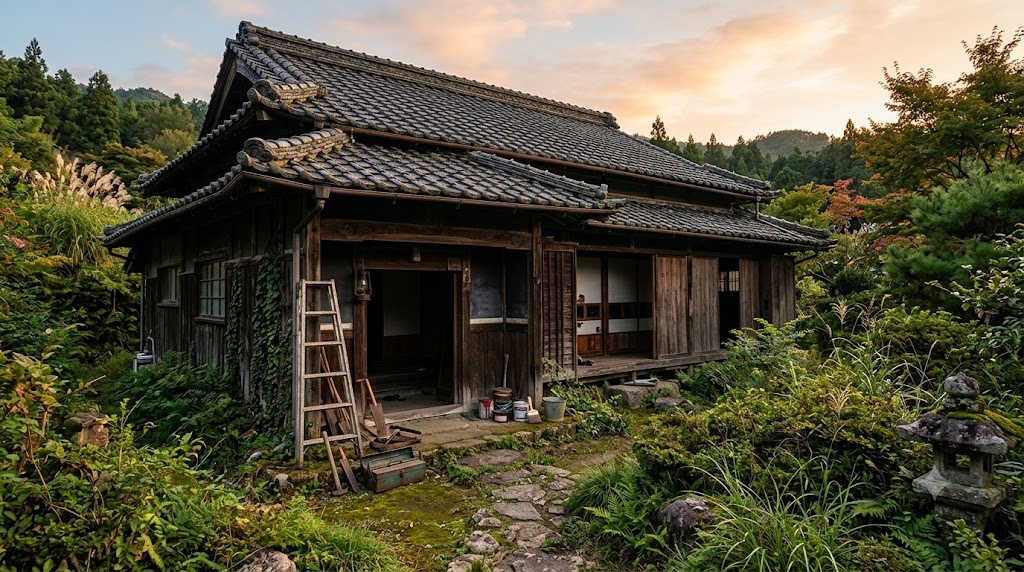
For a typical resale purchase in Japan, budget roughly 6–10% of the purchase price in one-time transaction costs on top of the price itself — more in percentage terms for very cheap properties, because several fees have fixed floors. A ¥5 million akiya can easily carry ¥600,000–900,000 in closing costs, while a ¥50 million Tokyo apartment might close at 6–7%. Then come the annual holding costs, which are low by Western standards but never zero.
Exact rates change with periodic tax reforms and temporary reduction measures, so treat the figures below as the standard framework and confirm current rates with the National Tax Agency, your judicial scrivener, or your agent before signing.
One-Time Costs at Purchase
| Item | Typical amount | Notes |
|---|---|---|
| Brokerage fee (仲介手数料) | 3% + ¥60,000 + consumption tax (legal maximum for properties over ¥4M) | Charged by the agent; low-priced properties may instead carry a fixed fee under rules allowing higher compensation on cheap rural stock |
| Real estate acquisition tax (不動産取得税) | Assessed value × 3% (land and residential buildings; 4% standard rate for non-residential) | Arrives by mail months after purchase — the classic surprise bill. Reductions often apply to qualifying residences |
| Registration and license tax (登録免許税) | Assessed value × 2% for ownership transfer (reduced rates apply in many residential cases); 0.4% for new registration; 0.4% of loan amount for mortgage registration | Paid at registration via your judicial scrivener |
| Judicial scrivener (司法書士) fee | ¥50,000–150,000 | Handles title transfer at the Legal Affairs Bureau — effectively mandatory |
| Stamp duty (印紙税) | ¥10,000–60,000 for most price bands | Revenue stamp on the purchase contract; scale rises with price |
| Fixed-asset tax settlement | Pro-rated share of the current year's tax | Buyer reimburses seller from the closing date |
| Fire/earthquake insurance | Varies with structure and coverage | Required by lenders; earthquake cover is an add-on capped relative to fire cover |
If you take a Japanese mortgage, add loan-related costs: origination or guarantee fees (often ~2% of the loan or a rate premium), plus the mortgage registration tax above.
Annual Holding Costs
Fixed asset tax (固定資産税) — 1.4%
The standard rate is 1.4% of the government-assessed value — which is typically well below market price (often 50–70% of market for buildings, and land has its own assessment system with substantial residential-land reductions of up to five-sixths for small residential lots). Billed each spring to whoever owned the property on January 1, payable in four installments.
City planning tax (都市計画税) — up to 0.3%
Charged on properties in designated urbanization areas, at a maximum 0.3% of assessed value. Rural properties outside these zones don't pay it.
For condominiums: management and reserve fees
Monthly building management fees (管理費) plus repair reserve contributions (修繕積立金) commonly total ¥15,000–40,000+ per month depending on the building. Scrutinize the reserve fund's balance and the long-term repair plan — an underfunded building means special assessments later.
Non-resident quirks
If you live outside Japan, you must appoint a tax representative (納税管理人) to receive and pay tax bills on your behalf. If you rent the property out as a non-resident, the tenant or management company generally must withhold 20.42% of gross rent toward your Japanese income tax, which you reconcile via an annual return.
Taxes When You Sell
Capital gains on Japanese real estate are taxed separately from other income, and the rate depends on how long you held the property as of January 1 of the sale year:
- Held 5 years or less: short-term rate — approximately 39.63% of the gain (national + reconstruction + local components).
- Held over 5 years: long-term rate — approximately 20.315%.
The gain is sale price minus acquisition cost (including those closing costs — keep every receipt) minus selling expenses, with building depreciation added back. Non-resident sellers face a 10.21% withholding on the sale price in many cases, credited against the final bill.
Inheritance and Gift: The Long-Game Consideration
Japan taxes inheritance of Japan-situs real estate regardless of the owner's nationality or residence, with progressive rates that reach high percentages on large estates. If your plan involves passing the property to family, get one consultation with a Japanese tax professional early — ownership structure decisions are much harder to change later.
A Worked Example
Resale countryside house, purchase price ¥8,000,000, building+land assessed value ¥4,500,000:
- Brokerage: ¥8M × 3% + ¥60,000 + tax ≈ ¥330,000
- Acquisition tax (after typical residential treatment): on the order of ¥100,000–140,000
- Registration tax + scrivener: ≈ ¥150,000–200,000
- Stamp duty: ¥10,000
- Insurance, pro-rated fixed asset tax, misc.: ¥60,000–100,000
Total ≈ ¥650,000–780,000, roughly 8–10% — before a single tatami mat is replaced. Annual holding cost thereafter: on the order of ¥60,000–90,000 in fixed-asset and city-planning tax for a property of this class, plus insurance and utilities.
Frequently Asked Questions
Do foreigners pay extra taxes when buying in Japan?
No. Japan imposes no foreign-buyer surcharge, no citizenship requirement, and no restriction on fee-simple ownership of land and buildings. Costs are identical to what Japanese buyers pay (reporting under the Foreign Exchange Act may apply post-purchase, and land in certain designated security zones has notification rules).
Can I get residency by buying property?
No — property ownership confers no visa rights whatsoever. Your ability to spend time in Japan depends entirely on your visa status.
Why is the assessed value so much lower than the price I paid?
Japan maintains separate valuation systems for taxation (fixed-asset assessed value, roadside land values) that deliberately sit below market. Taxes key off these lower values — one reason holding costs are gentler than in most Western countries.